
Blogs
The Old Way of Sourcing Carriers Just Became a Liability
Following the Supreme Court's 9-0 ruling in Montgomery v. Caribe Transport II, 60% of brokers say they're already changing how they vet carriers. Here's why starting with a continuously-vetted network beats vetting under pressure.
Adriana Pulley · July 7, 2026 · 2 min read

On May 14, the Supreme Court ruled 9-0 in Montgomery v. Caribe Transport II. Federal preemption no longer shields brokers from negligent hiring claims brought in state court. Translation: the carrier you select is now your liability, not just your vendor.
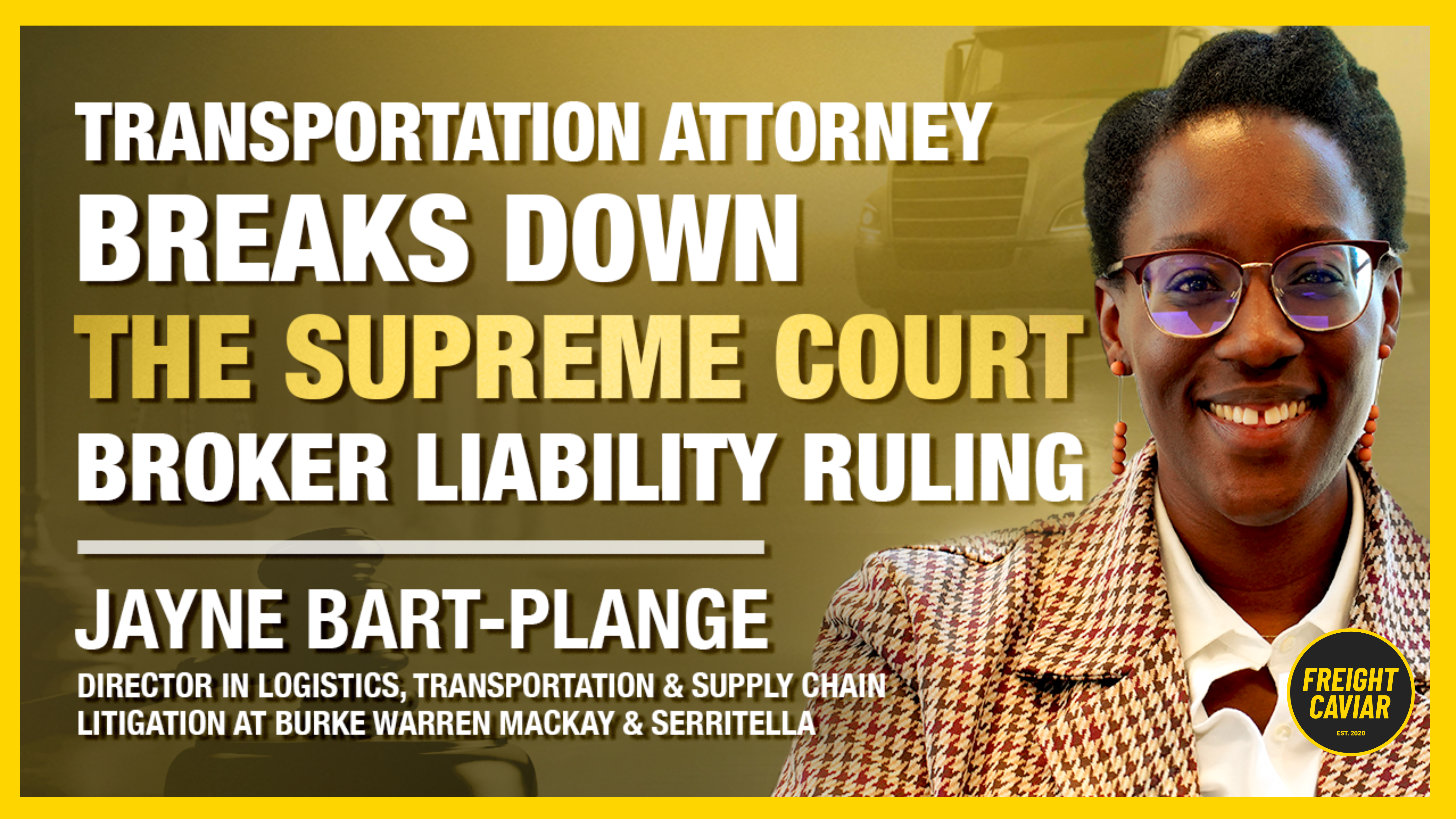
Jayne Bart-Plange, Esq., the transportation attorney FreightCaviar spoke with right before the ruling, doesn't sugarcoat what's coming: "They will sue early. They'll sue often." Her take: plaintiff attorneys are naming every party in reach, brokers included, on the way to whoever has the deepest pockets.
Supreme Court: 9 - Brokers: 0 | Freight Caviar
We sat down with Jayne Bart-Plange Esq., Partner & Director in Logistics, Transportation & Supply Chain Litigation at Burke, Warren, MacKay & Serritella, to discuss the Supreme Court's recent broker liability ruling, how enforcement gaps are shifting liability onto brokers, and the practical steps you can take to mitigate legal and operational risk as a broker.
Freight Caviar
Brokers got the memo. In a FreightCaviar x OTR Solutions poll from May 22, 60% of respondents said they're already making operational or legal changes in response to the ruling. Compliance overhauls. Exposure audits. Insurance adjustments.
The other 40% are betting this isn't their problem yet.
It is.
The Old Way Doesn't Hold Up Anymore
For years, sourcing capacity looked the same no matter who you asked:
Find a carrier on a load board.
Vet them under pressure, because the market doesn't wait.
Hope the rate is right and the carrier is who they say they are.
That sequence used to be a margin problem. Now it's a legal one. Vetting after you've already committed to a carrier means due diligence happens under pressure, fast, incomplete, and exactly the scenario plaintiff attorneys are building negligent hiring cases around.
The New Way Starts With Continuously-Vetted Capacity
OTR Select flips the order. Instead of finding a carrier and then scrambling to vet it, brokers start with carriers who are already underwritten, already monitored, and already running the lane they need covered.
That means:
Documented, defensible load history from the carrier
Consistently verified contact information.
Confidence in knowing authority and insurance are active and up to date
In a post-Montgomery market, that trail is the difference between due diligence and exposure.
What Brokers Are Saying
Brokers across every size tier are already running OTR Select into day-to-day sourcing:
$1.2B brokerage: "From what I'm seeing, the speed of the data eliminates the lag we see from other tools when the market changes."
$900M brokerage: "It's only been a few weeks, but this tool has been magic."
$600M brokerage: "Our reps have had tremendous success using OTR Select to find and develop new carriers for our network."
$100M brokerage: "Found a carrier to haul a dedicated round trip today. $4K a week in gross profit. Value in every call."
The Bottom Line
The ruling already happened. The lawsuits are already being filed. The only open question left is whether your sourcing process catches up before or after you need it to.
Get the next one in your inbox.
Free, 3× a week, the brief 15,000+ freight pros read.


